Chemicals

You Could Be Drinking Beaver Anus

The alternate title for this post, given to me by my brother-in-law Lee, was “Food Marketing is Just That”, but I thought the beaver anus would get more attention.

I started thinking about this issue after my Dad bought ‘all natural’ Hillshire Farms pork and we got into a fight when I wouldn’t eat it. I tried to explain to him that ‘all natural’ isn’t a regulated term and doesn’t mean anything, but he had a hard time believing or understanding me. Dad, this post is for you (and everyone that drinks flavored water).
I’m sure you see Natural everywhere – cereal boxes, pork chops, granola bars – but in short, the label does not mean anything and can mean you are eating/drinking some pretty strange things (both petroleum and beaver anal glands are technically from the earth).
Problem 1: Unlike ‘USDA Organic’ and ‘Non-GMO Project Verified’, ‘All Natural’ is not a regulated term and has no agreed-upon definition. From the FDA website:
“From a food science perspective, it is difficult to define a food product that is ‘natural’ because the food has probably been processed and is no longer the product of the earth. That said, FDA has not developed a definition for use of the term natural or its derivatives. However, the agency has not objected to the use of the term if the food does not contain added color, artificial flavors, or synthetic substances.”
Problem 2: Due to not having a strict definition, companies often mislead or lie to consumers about products being ‘all natural’. Kashi, Barbara’s, Cargill, and more have settled class action lawsuits when their products were independently tested and GMO and artificial ingredients were found.
Problem 3: Even if an ingredient is ‘natural’, i.e. it does come from the earth in some way, you still might not want to consume it. Flavored soda water is huge right now. Do me a favor and look on the back of your Hansen’s or La Croix – you’ll see ‘natural flavoring’ listed. It’s hard to tell exactly what that is, but one possibility is that Castoreum is used as the natural additive, which comes from a gland in a beaver butt. AHH! This National Geographic article, Beaver Butts Emit Goo Used for Vanilla Flavoring” sums up my thoughts nicely and one of my favorite lines is, “Because of its close proximity to the anal glands, castoreum is often a combination of castor gland secretions, anal gland secretions, and urine.” Delicious!
In summary, don’t buy products marked ‘all natural’ and expect them to be healthy, minimally-processed, GMO- or beaver anus -free. Look for the USDA Organic logo and push back on your grocers and favorite brands to tell you what is in the food and beverages you are putting into your body.

Fall is RUINED – Goodbye Pumpkin Spice Latte

FB_SBPumpkinSpiceLatte_5-2

If you’ve seen this Food Babe post on Pumpkin Spice Lattes then you are likely as devastated as I am. My go-to fall drink (because how else do you tell the seasons in California if not by the Starbucks beverage options and cup colors!) is filled with all sorts of disgusting things I do not want in my body. Topping off that list is Carmel Coloring, made with ammonia and considered to be cancer-causing.

This Consumer Report’s article provides info on the risks of Carmel Coloring (4-MeI – also found in many sodas), but the basics are that a federal government study found it caused cancer in mice in 2007 and since 2011 it’s been listed as ‘possibly carcinogenic to humans’ by the International Agency for Research on Cancer. Since 2012, California (man I love my state!) has required manufacturers to label the product with a cancer warning if it exposes consumers to more than 29 micrograms of 4-MeI per day. I have definitely had more than one PSL in a day..crap.

So, goodbye Pumpkin Spice Lattes. Until Starbucks makes some serious ingredient changes, my fall will remain PSL- and cancer -free.

Below: Happier times, last fall sipping on my first PSL of the season when I was blissfully ignorant about the toxins entering my body:

photo (2)

A GGG Halloween

Work gets crazy, blog dies down; story of my life. I missed a post on the government shut down and the risk to food safety since the FDA was only checking meat and fish (not fruit, veggies, dairy products or anything else – remember the spinach and peanut butter salmonella recalls?!). You can instead read a good NY Times article about it if you’re interested.

annies bunniesOn to Halloween. I don’t have kids but have been contemplating what to hand out to the few children in our apartment building who will come knocking on our door (oh man I really hope they come!). After much debate, I settled on Annie’s Organic Bunny Fruit Snacks. One selfish reason is because my husband loves them so we already have them in the house, and if the kids don’t show, he’ll eat them.

The main reason though is that that they are a healthier (and still delicious!) option to candy. At 70 calories per pouch, while they do contain cane sugar, they also are made with real fruit juice, have 100% vitamin C, are gluten free and vegan (so no worries on allergies), and are non-GMO. Most importantly, they have no synthetic colors.

I did a little research on a Halloween candy favorite, candy corn, and was disgusted to learn that there is more than a gram of sugar in EACH piece AND they are filled with Red No. 3. Red No. 3 is a synthetic dye, used to make them orange, which has been given a “high concern” rating by the Environmental Working Group because it’s a carcinogen.

In 1990 the FDA instituted a partial ban on Red No. 3, citing research that high doses have been found to cause cancer in rats, but left it there much to the dismay of consumer protection groups. So while you won’t find it in lipsticks, baking mixes, seasonings or jello, you may still be ingesting it in soft candies, juices, gum, and breakfast cereals. Other candies on the terrifying list: Now & Laters with Red 40 carcinogenic dye, Necco wafers (Red 3 and 40, sweet double dose), and Sour Skittles (Red 40 and Yellow 6).

Annie’s fruit snacks get their color from black carrots, which may lead to… improved eye sight? Check the labels and check yourself before you hand our fistfuls of cancer to the adorable kids dressed as princesses and pirates on your front steps this Halloween!

What’s the deal with those pesky parabens?

If you’re like me you only buy paraben-free lotions, shampoos, deodorants and makeup. If you’re also like me you only kind of know what parabens are and why they are bad for you. So, here’s all you need to know about parabens to sound more educated at your next dinner party: 

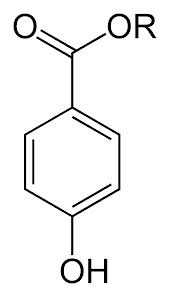
parabenParabens are a class of (mostly synthetically produced) chemicals, used as preservatives in the cosmetics and pharma industries. Companies use them because they are cheap, help products last on store shelves, and because they prevent the growth of microbes.

Here’s the controversy: #1 absorption, #2 cancer, #3 hormones.

Well ok #1 isn’t up for debate, parabens can be absorbed through the skin, blood, and digestive system; fact. “If these substances are in your blood, they’re also in your liver and in every other place in your body,” explains Torkjel Sandanger, head researcher of a Norwegian study on parabens.

#2 Parabens have been found in breast cancer tumors; fact. In 2004 researchers in the UK detected parabens in the breast cancer tumors of 19 out of 20 women studied, and discovered that the parabens came from something applied to the skin such as an underarm deodorant or cream. The controversy kicks in because it was a small study and did not prove a causal relationship between parabens and breast cancer. Denmark has banned parabens, the EU flip flops on it every few years (currently allowed in up to 0.4% concentrations), and the FDA says they are no biggie because the Cosmetic Ingredient Review (an INDUSTRY-SPONSORED organization) says they’re no biggie. I’m siding with Denmark on this one.

#3 Parabens have been shown to mimic estrogen (which plays a role in breast cancer and is why your 9 year old has boobs); fact. Parabens bind to estrogen receptors on cells and disrupt hormone function (this effect is linked to increased risk of breast cancer/reproductive toxicity). On this one the FDA says it’s ‘aware that estrogenic activity in the body is associated with certain forms of breast cancer. Although parabens can act similarly to estrogen, they have been shown to have much less estrogenic activity than the body’s naturally occurring estrogen.’ Well great, I’m glad that the chemicals we’re putting into our bodies are LESS estrogenic than what’s already going on.  Really though, I don’t want anything but my natural estrogen floating around in there.

As always make your own decision, but no seriously stop slathering chemicals on your body and for the love of God please get paraben-free, aluminum free deodorant!

Hide your kids, hide your wife.

While the above may be an exaggerated blog title, this is the headline I wake up to:

Major Retailers Sell Carcinogenic Shampoos, Lawsuit Claims

And I thought: no wonder everybody knows someone that has cancer, and about that gem of a news story from 2012. Maybe we should stop putting cancer in our F’ing SHAMPOO.

The culprit ingredient is cocamide diethanolamine (cocamide DEA), used to make foam and bubbles, which was added last year as a known carcinogen to Cali’s Proposition 65 list (chemical disclosure law) based on the assessment by The International Agency for Research on Cancer (part of the World Health Organization and super legit).

The Center for Environmental Health (kickass NGO focused on protecting people from toxic chemicals) bought products around the bay area and had them independently tested, as companies were supposed to remove it by June. Testing found 98 products contained the chemical and offenders included Colgate Palmolive, Paul Mitchell, Lush, and store-brand products purchased at Walmart, Trader Joe’s, Kmart and Babies R Us.

To see the full list of shampoos you, your kids, and your wife should definitely not be lathering on click here.

Where have all the cowboys gone?

My last post about Naked Juice’s $9 mil settlement for false advertising (WTF #1) got me thinking about the brands truly pioneering sustainable products and how a lot of them are no more. These cowboys have mostly been purchased by larger (mostly terrible) companies that change the products, change the ingredients, and change the supply chains all under the guise of reaching the masses. I have no snobbery around my favorite eco-products being offered at Wal-Mart (I have snobbery around not stepping foot in a Wal-Mart but that’s for another day). I actually LOVE the idea of more people being able to buy the products I love and use. More people making conscious choices. Which in theory should add up to more trees saved, less GHGs put into the air, better labor conditions, right?! Unfortunately the reality isn’t quite that rosy.

Since I’m lactose-free soy is part of my diet. When Silk Soymilk was taken over by megatron Dean Foods, they began to use conventional soybeans instead of organic ones WITHOUT CHANGING THE PACKAGING. WTF #2. The same Dean Foods also bought Horizon (what was great organic milk) and now they are being sued by farmers and the Cornucopia Institute for selling fake organic milk, and investigated by the Justice Department. WTF #3.

Colgate-Palmolive bought my beloved Tom’s and surprise surprise they now have an antiperspirant for the first time that contains aluminum (the debated ingredient that may be linked to breast cancer or may just be a lot of chemical to roll up onto your delicate parts). Oh and their mouthwash contains a ‘natural’ ingredient derived from gas and oil, Poloxamer 335 & 407. WTF #4. But they are actually one of the companies doing it the best. While their recent switch to (non-recyclable) plastic toothpaste tubes sent hippies up in arms, they transparently listed customer feedback as the reason for the switch (the aluminum tubes cracked/split apparently) and put a band-aid on the recycling problem by letting you ship them to Maine, where they’ll ship them to Illinois to be made into other plastics. But will you do that? Will I? At least they ditched the cardboard tube box!

Other notable cowboy losses since 2000 include: Burt’s Bees now part of the Clorox manufacturing machine, L’Oreal owns my new favorite The Body Shop, Unilever owns Ben & Jerrys, Coke owns Odwalla and Honest Tea, Danone owns Stoneyfield Farm and Brown Cow, Kellogg owns Kashi, General Mills owns Cascadian Farm, Larabar, and Food Should Taste Good, and Schwepps owns Green & Black Organic Chocolate (this one I was surprised about!). Do you know of others?

Check out the infographic below to see Michigan State’s mapping of where our organic brands really come from and do you own research to see if the products have changed, as the packaging likely hasn’t.

Meanwhile, I’m keeping a desperate hold on to my few remaining favorites Amy’s, Arrowhead Mills, Nature’s Path, and Organic Valley.

Michigan State Organic Industry Structure

Michigan State Organic Industry Structure

Smoothies with a side of Toxin

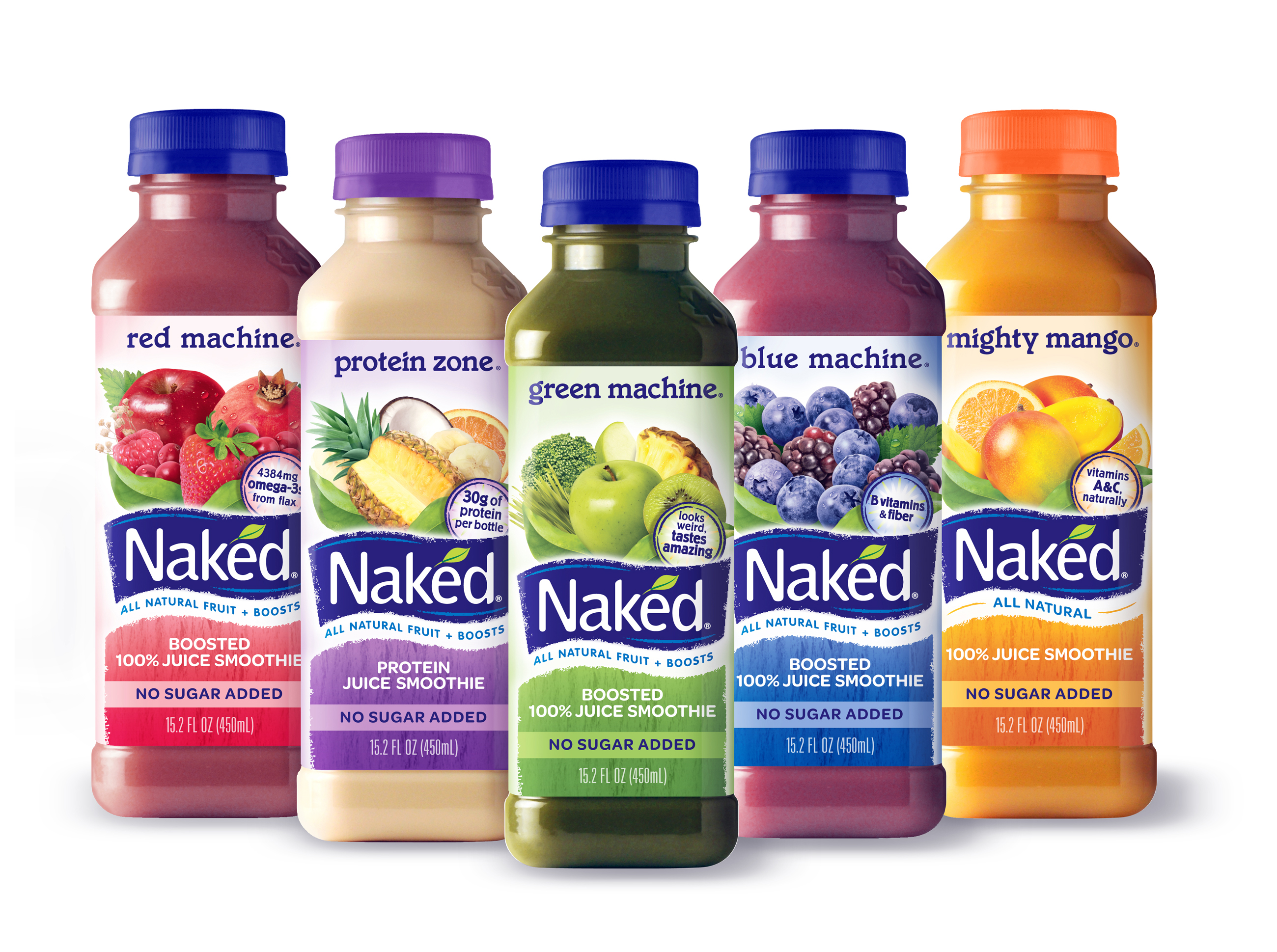
naked juiceIf you haven’t yet heard (and you might not have since Pepsi is working very hard to keep this quiet), Naked Juice (which they own) was sued for falsely claiming to be “All Natural” and incorrectly marketing their juices and smoothies. This week Naked/Pepsi settled for $9 million and agreed to remove the “All Natural” labels from its products.

Let’s look at what actually is in these claimed-to-be “All Natural Products”:

  • Fibersol-2 – an engineered soluble corn fiber that acts as a low-calorie bulking agent
  • Fructooligosaccharides – an alternative sweetener which comes from fruits and veggies but then is processed to make a commercial mixture. It ‘seems to be safe when taken in less than 30 grams per day, can cause intestinal gas, intestinal noises, bloating, stomach cramps, and diarrhea’ but ‘these effects are usually mild if the dose is less than 10 grams per day’ Great.
  • Calcium pantothenate -a synthetically produced vitamin made by condensing isobutyraldehyde with formaldehyde. FORMALDEHYDE! Also found in skin/hair products..yum.
  • Genetically-modified soy – shocker that Pepsi contributed $2.5 million to defeat Cali’s GMO labeling Prop 37

There are more. These ingredients (obviously) do not exist in nature so Naked was called out for being the liar that they are. Way to go USA consumers – let’s hope this kicks off more thought, interest, and inquiry on accurate labeling.

‘Transparency is not a choice. It’s gonna happen, the only choice is does it happen to you or do you participate in it’..  Alex Bogusky

Turns out The Body Shop is pretty awesome.

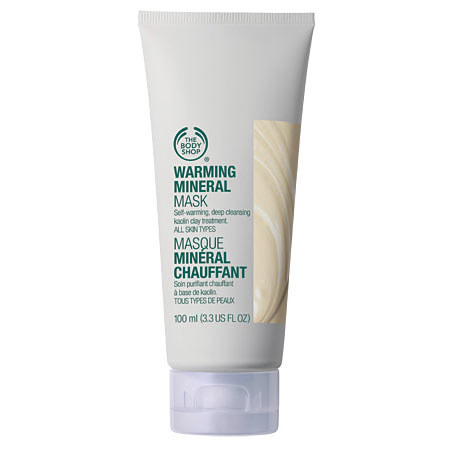
warming-mineral-mask_lI get asked a lot about what moisturizers and creams I use (since cosmetics are not regulated and there are all sorts of horrible chemicals in most of the things you can buy at CVS).

Turns out The Body Shop is a great option. It’s similar to a Patagonia because it was started to improve society &  the planet. I associated it as a bit old school, but really it’s kind of a secret gem. They’ve been 100% anti animal testing from their first day in business (!), every product is certified Cruelty-Free, and they’re also one of the first big brands to be as Fair Trade as they possibly can be. Fair Trade as a seal is just getting into cosmetics and Body Shop is helping them expand. They currently source FT Shea (which is a hugely controversial ingredient – there is conflict Shea butter, I know, wild), Tea Tree, Honey, Hemp, and Aloe. They do a ton with employee volunteerism, have their own foundation, encourage female self esteem (not with makeup, with health), focus on domestic violence, work with a lot of local community groups, are replacing store lighting with LEDs, installed solar on their HQ and other buildings, and have a huge focus on ethical suppliers (which is totally awesome, a lot of companies stop at their own operations and then say they have no control over what suppliers do).

I use the warming mineral mask (because who can afford regular facials) and I really like it. It definitely pulls out the gunk and I break out for about a day after using it (similar to with a facial) but then my skin feels so clean, smooth, and even tighter. Worth a try if you’re into that.

My other favorite brand is Yes To (Carrots, Blueberries, Cucumbers). It’s strong environmentally and health-wise they don’t put any chemical crap in their products. Good Guide rates them as a 6/10 mostly because their social programs aren’t super transparent. I really like how the Carrots Repairing Night Cream feels on my face, and you can get it at Target which helps. I didn’t love the cucumber moisturizer (smelled really fragrant and went on sticky), and the blueberry I like only in the eye cream.

I also use the derma E day cream (with SPF) and I really like it- not greasy and perfect for every day. They sell it at Whole Foods (it’s expensive I think $25 for a little tub), and Good Guide rates it a 7.4.

To healthy faces, healthy society, and a healthy planet!

There is a Styrofoam Hummer at SFO

IMG_8047

There is life-size and detailed Hummer made of Styrofoam at San Francisco International Airport. It symbolizes all the excess and waste in our society; I get it.

It’s part of The Art of Recology Exhibition now in terminal 3, and there until October.

As you may know I’m a little obsessed with Recology (80% waste diversion rate in SF thanks to them! Municipal composting!), and one program I absolutely love is their artists in residence program. Artists (like the one that made the styro-hummer) make all of their pieces out of things found in the dump. There are dresses, paintings, sculptures, the works. Check it out! This one in particular was my favorite because I hate Styrofoam. HATE it. It doesn’t breakdown for over 500+ years, produces toxic chemicals when it’s being formed, and breaks up all tiny and fucks with ocean life. I think it’s actually illegal in SF (oh how I love this city!).

And kudos to SFO for displaying art exhibits in the terminals. Yet another reason why I’m never leaving SF.

Find a green cleaning product, the easy way.

I love, LOVE when other people vet things and make life easier for me. It’s important to trust the source doing the vetting, and I do look through the process to make sure it sounds reasonable and not like they are skimming or manipulating data. Last week the Environmental Working Group released its new online Guide to Healthy Cleaning. They are known for their database on skincare products already and this time their scientists tackled products that claim to be chemical free, non-toxic, natural, and their non-organic counterparts. Due to yet another US regulation gap, home cleaning products are NOT required to list any ingredients harmful or otherwise on their labels (disgusting right). OSHA only regulates workplace products, so while you may see ingredients on the back of some spray bottles you have at home, these are entirely voluntary and many companies leave out a few things they aren’t proud of! For instance, formaldehyde which is a known carcinogen and illegal in Europe is found in 409. Way to go USA.

EWG’s scientists went to work and spent 14 months doing a deep dive into over 2,000 products and assessing them against both national and international toxicity data sources. The full process of their research is described here.

Some brands on the A list:

Seventh Generation, Dr. Bronner, and Green Shield. Every product from Whole Foods brand was an A or a B and Mrs. Meyer’s got Bs across the board.

And brands that are doing bad things to you, from the F list:

BabyGanics, Simple Green, Tide, Gain, Downy, All, Green Works dish soap, Method dish soap, Palmolive, Cascade, and a host of others.


Check out EWG’s full list to see where your products rank.