Food

You Could Be Drinking Beaver Anus

The alternate title for this post, given to me by my brother-in-law Lee, was “Food Marketing is Just That”, but I thought the beaver anus would get more attention.

I started thinking about this issue after my Dad bought ‘all natural’ Hillshire Farms pork and we got into a fight when I wouldn’t eat it. I tried to explain to him that ‘all natural’ isn’t a regulated term and doesn’t mean anything, but he had a hard time believing or understanding me. Dad, this post is for you (and everyone that drinks flavored water).
I’m sure you see Natural everywhere – cereal boxes, pork chops, granola bars – but in short, the label does not mean anything and can mean you are eating/drinking some pretty strange things (both petroleum and beaver anal glands are technically from the earth).
Problem 1: Unlike ‘USDA Organic’ and ‘Non-GMO Project Verified’, ‘All Natural’ is not a regulated term and has no agreed-upon definition. From the FDA website:
“From a food science perspective, it is difficult to define a food product that is ‘natural’ because the food has probably been processed and is no longer the product of the earth. That said, FDA has not developed a definition for use of the term natural or its derivatives. However, the agency has not objected to the use of the term if the food does not contain added color, artificial flavors, or synthetic substances.”
Problem 2: Due to not having a strict definition, companies often mislead or lie to consumers about products being ‘all natural’. Kashi, Barbara’s, Cargill, and more have settled class action lawsuits when their products were independently tested and GMO and artificial ingredients were found.
Problem 3: Even if an ingredient is ‘natural’, i.e. it does come from the earth in some way, you still might not want to consume it. Flavored soda water is huge right now. Do me a favor and look on the back of your Hansen’s or La Croix – you’ll see ‘natural flavoring’ listed. It’s hard to tell exactly what that is, but one possibility is that Castoreum is used as the natural additive, which comes from a gland in a beaver butt. AHH! This National Geographic article, Beaver Butts Emit Goo Used for Vanilla Flavoring” sums up my thoughts nicely and one of my favorite lines is, “Because of its close proximity to the anal glands, castoreum is often a combination of castor gland secretions, anal gland secretions, and urine.” Delicious!
In summary, don’t buy products marked ‘all natural’ and expect them to be healthy, minimally-processed, GMO- or beaver anus -free. Look for the USDA Organic logo and push back on your grocers and favorite brands to tell you what is in the food and beverages you are putting into your body.
Even My Dad Goes to the Farmer’s Market

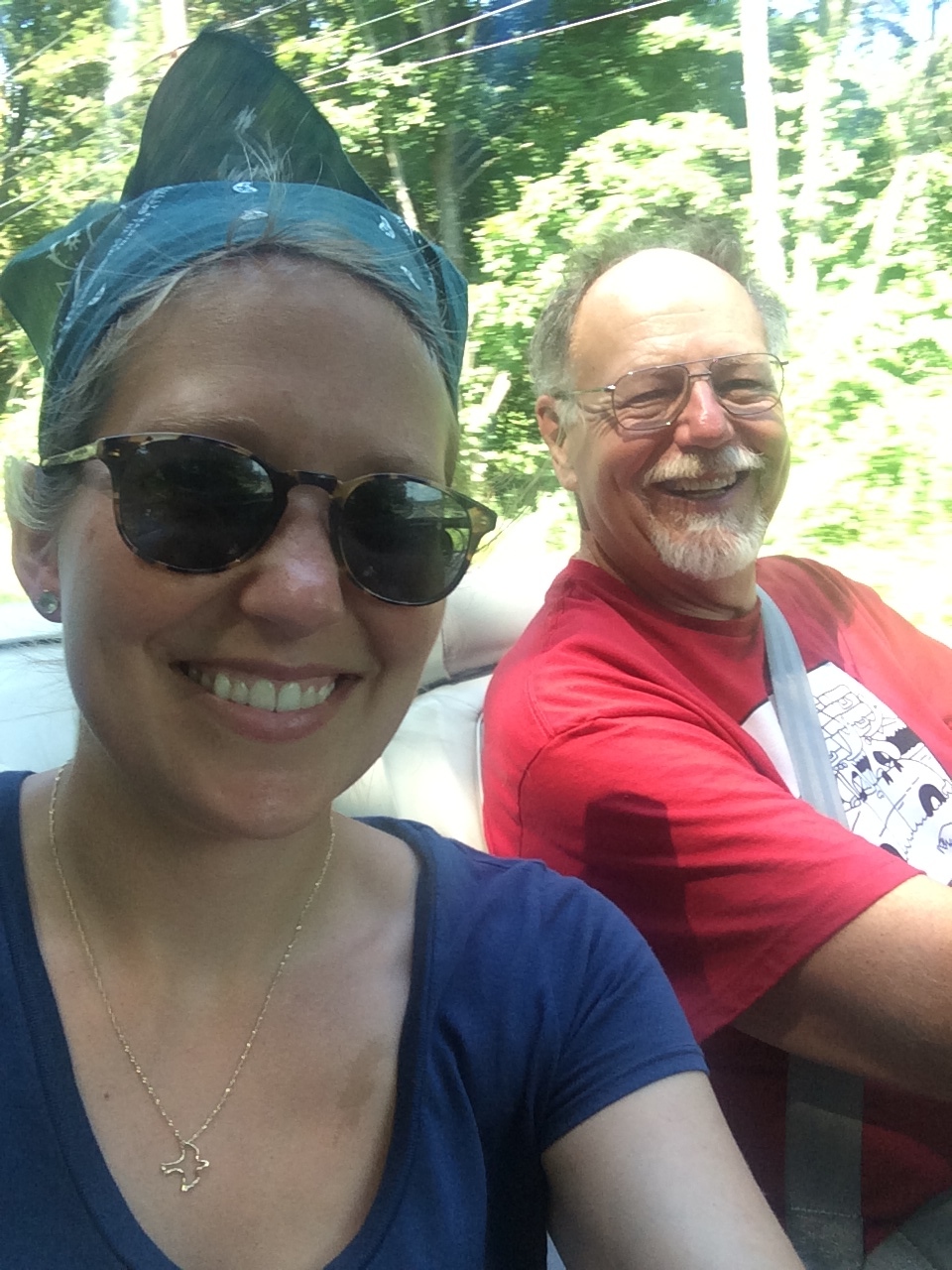
Dad and I drive the vintage convertible to our farmer's market (and yes he's looking at the camera - he's a terrifying driver!).

Dad and I drive the vintage convertible to our farmer’s market (and yes he’s looking at the camera – he’s a terrifying driver!).

This summer, I spent two weeks on the East Coast in late August/early September – I know, slow blog summer – I was too busy enjoying people! Heading back east is one of my favorite activities, as I get to see friends and family and look at that big Connecticut Sky, but it also comes with some panic around what I will eat. My Dad’s favorite meals to serve me (and don’t get me wrong, these things are always delicious!) are processed turkey kielbasa, pierogis and iceberg lettuce out of a bag. Ok the bagged lettuce is never delicious. Dad has really come a long way in the food department, now buying hamburgers from our local butcher and almond milk, but the Tolland county area lacks my beloved San Francisco eating options. Or so I thought.

Kale chips and food trucks. In Coventry, CT. I’m serious. My Dad has been raving about the Coventry Farmer’s Market for over a year and frankly I didn’t believe that it would be that good. My weekly shopping trips include the Ferry Building farmer’s market and Mission Community Farmer’s market and I thought: Connecticut, please. The big guy convinced me to hop in our convertible (1990 Mustang ragtop- not very sustainable but almost a classic and so very fun to drive!), and we headed over to check this thing out. Well, the Coventry Farmer’s Market is incredible. It’s huge – more town fair than market. It has real Mexican food – the closest thing CT had to Mexican food previously was Qdoba and we all know how authentic that is. It also has a cannoli food truck, gluten-free bakery stands, local artisans selling soap and woven placemats, and sweet summer corn for $0.25. This was my heaven. Eastern Connecticut has an entire local, anti-GMO, farm-to-table, food movement that I knew nothing about. If you live in or near CT, this site will help you find all things local food.

If my Dad is shopping at the farmer’s market, you can too. One reason he shops there is because it often isn’t more expensive – my Dad hates expensive – and everything tastes better. Vendors let you try things (husk tomatoes/ground cherries were a new one for us!), tell you how to prepare the produce if you’re unsure, and you’re doing a world of good for your body and your local economy. If you need more convincing, read Barbara Kingsolver’s Animal, Vegetable Miracle, watch one of my favorite documentaries, Food Fight, and think about the impact YOU can make on the planet and your community.

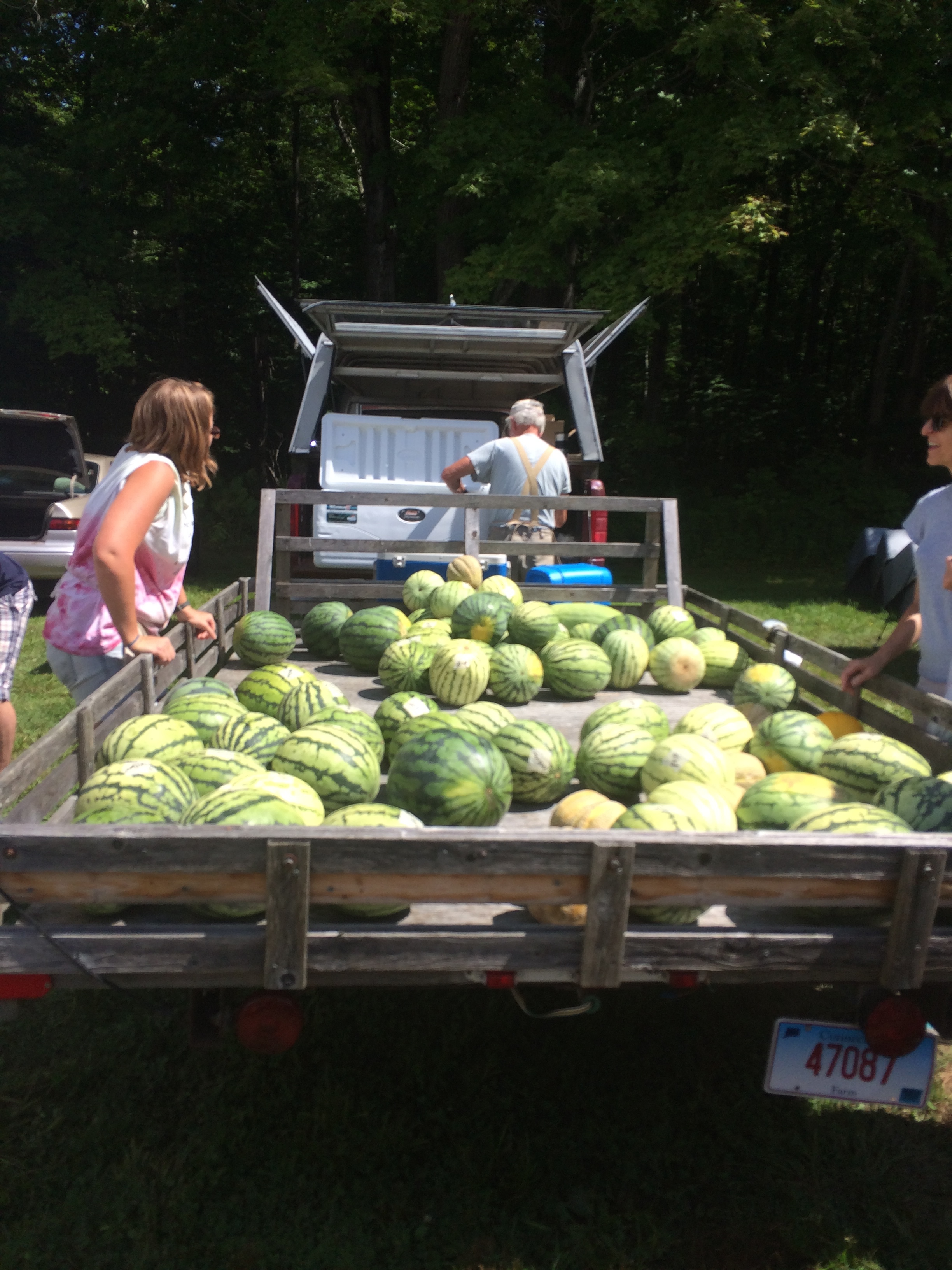
Below: My favorite food truck (cannolis!) and juicy summer watermelons

IMG_7117 IMG_7118

Eating Mushrooms In Prospect Park – Meet Forager Ava Chin

I recently joined 18 Reason’s FoodLit Book club (I know, how very San Francisco), and the first book I read was Ava Chin’s Eating Wilding. We were lucky enough to have Ava join us and in addition to discussing foraging, love and the process of getting a book published, I got to try my first foraged greens pie. Holy yum.

Ava and the FootLit Book Club moderator Heather photo credit @SusannaKChau

Ava and the FootLit Book Club moderator Heather photo credit @SusannaKChau

Ava’s book is a quick, honest and endearing read weaving together stories on childhood, love, family, nature, and food – so many wonderful things to relate to! I’m going to focus on the food part, as I was blown away that you can find safe and edible things to eat, in Brooklyn’s Prospect Park or in a neighbor’s backyard in the middle of winter. Ava describers herself as a sort of life forager (searching for love, her father, and morel mushrooms), and started by using Euell Gibbon’s Stalking the Wild Asparagus as a field guide while roaming the streets of NYC. She finds and eats all sorts of things: oyster and morel mushrooms, field garlic, garlic mustard, mulberries, lambsquarters and wood sorrel (I called these sour clovers growing up) in neighborhoods where I used to live! Her book includes helpful recipes (what the heck do you do with wood sorrel after all), and our discussion helped inspire me to notice the food growing all around me (turns out wild fennel is everywhere in SF!).

As I continue my journey into sustainable eating, my latest quest has been eating seasonally. I’m not sure if I’ll ever be a forager myself (though next time I’m in Brooklyn I will be on the hunt for field garlic!), but I know that delicious things grow in my Bay Area community year round, and that I want to eat them. Since June, I’ve limited my fruit and veggie purchases to farmer’s markets, because the food tastes better. I will admit, I cheated a few weeks ago, missing the blueberries of June, and bought organic Oregon blueberries at Whole Foods. They were disgusting. Missing was the juicy sweet and tart flavors of my summer blueberries, and all that remained were these mealy eyeballs that I couldn’t even feed to the dog. Goodbye store-bought fruit, I now know what fruit is supposed to taste like.

If you’re interesting in foraging: read Eating Wilding, and see if your city or town offers foraging classes or food walks, like this one at Forage SF. Even if foraging isn’t for you, try eating more fruit and vegetables from your local farmer’s market – I promise you will not be disappointed. Yes, you may be stuck with squash all winter, but raspberries in December don’t taste good, so why eat them?  Here’s to happy and sustainable eating!

A GGG Halloween

Work gets crazy, blog dies down; story of my life. I missed a post on the government shut down and the risk to food safety since the FDA was only checking meat and fish (not fruit, veggies, dairy products or anything else – remember the spinach and peanut butter salmonella recalls?!). You can instead read a good NY Times article about it if you’re interested.

annies bunniesOn to Halloween. I don’t have kids but have been contemplating what to hand out to the few children in our apartment building who will come knocking on our door (oh man I really hope they come!). After much debate, I settled on Annie’s Organic Bunny Fruit Snacks. One selfish reason is because my husband loves them so we already have them in the house, and if the kids don’t show, he’ll eat them.

The main reason though is that that they are a healthier (and still delicious!) option to candy. At 70 calories per pouch, while they do contain cane sugar, they also are made with real fruit juice, have 100% vitamin C, are gluten free and vegan (so no worries on allergies), and are non-GMO. Most importantly, they have no synthetic colors.

I did a little research on a Halloween candy favorite, candy corn, and was disgusted to learn that there is more than a gram of sugar in EACH piece AND they are filled with Red No. 3. Red No. 3 is a synthetic dye, used to make them orange, which has been given a “high concern” rating by the Environmental Working Group because it’s a carcinogen.

In 1990 the FDA instituted a partial ban on Red No. 3, citing research that high doses have been found to cause cancer in rats, but left it there much to the dismay of consumer protection groups. So while you won’t find it in lipsticks, baking mixes, seasonings or jello, you may still be ingesting it in soft candies, juices, gum, and breakfast cereals. Other candies on the terrifying list: Now & Laters with Red 40 carcinogenic dye, Necco wafers (Red 3 and 40, sweet double dose), and Sour Skittles (Red 40 and Yellow 6).

Annie’s fruit snacks get their color from black carrots, which may lead to… improved eye sight? Check the labels and check yourself before you hand our fistfuls of cancer to the adorable kids dressed as princesses and pirates on your front steps this Halloween!

Smoothies with a side of Toxin

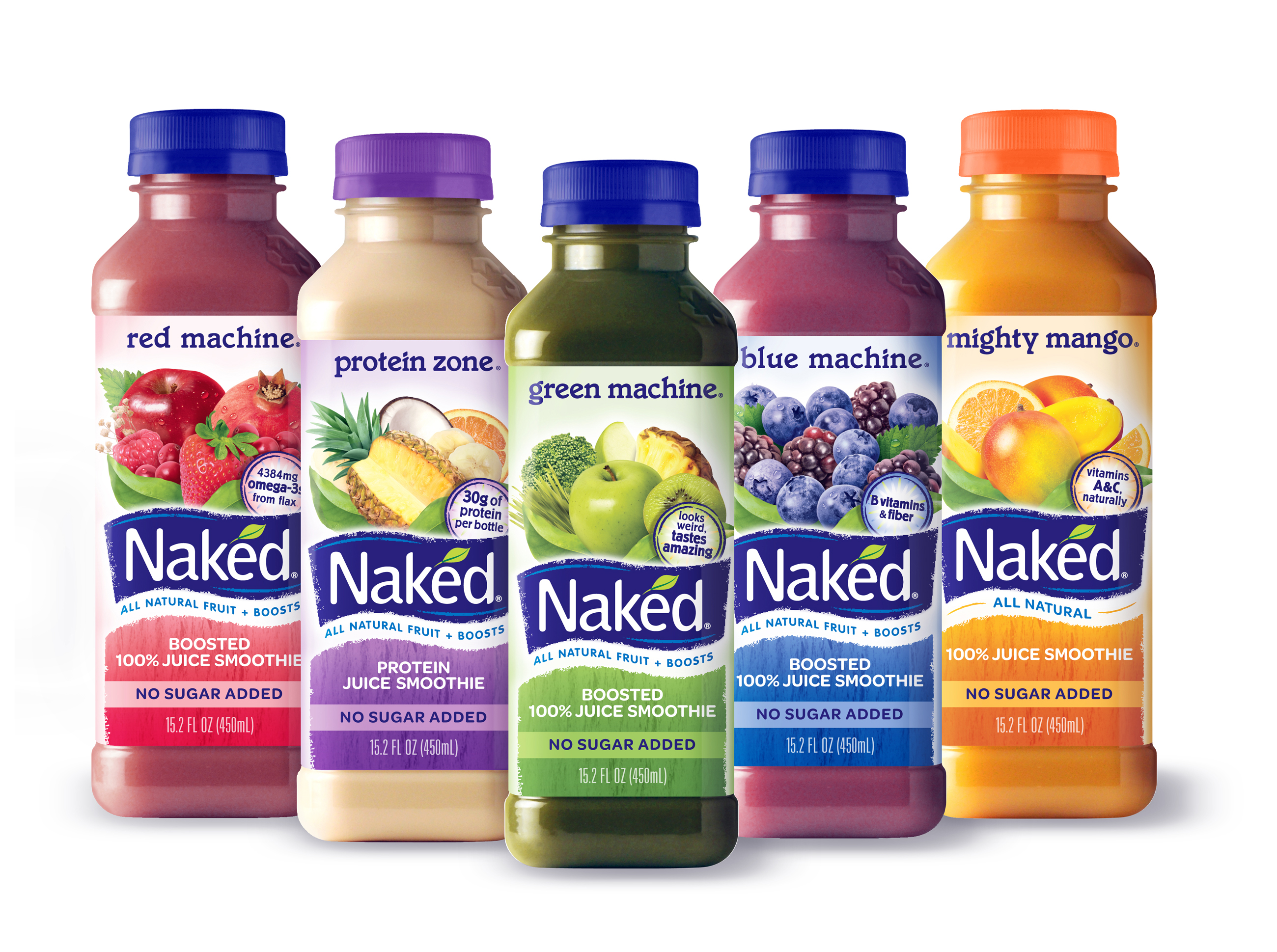
naked juiceIf you haven’t yet heard (and you might not have since Pepsi is working very hard to keep this quiet), Naked Juice (which they own) was sued for falsely claiming to be “All Natural” and incorrectly marketing their juices and smoothies. This week Naked/Pepsi settled for $9 million and agreed to remove the “All Natural” labels from its products.

Let’s look at what actually is in these claimed-to-be “All Natural Products”:

  • Fibersol-2 – an engineered soluble corn fiber that acts as a low-calorie bulking agent
  • Fructooligosaccharides – an alternative sweetener which comes from fruits and veggies but then is processed to make a commercial mixture. It ‘seems to be safe when taken in less than 30 grams per day, can cause intestinal gas, intestinal noises, bloating, stomach cramps, and diarrhea’ but ‘these effects are usually mild if the dose is less than 10 grams per day’ Great.
  • Calcium pantothenate -a synthetically produced vitamin made by condensing isobutyraldehyde with formaldehyde. FORMALDEHYDE! Also found in skin/hair products..yum.
  • Genetically-modified soy – shocker that Pepsi contributed $2.5 million to defeat Cali’s GMO labeling Prop 37

There are more. These ingredients (obviously) do not exist in nature so Naked was called out for being the liar that they are. Way to go USA consumers – let’s hope this kicks off more thought, interest, and inquiry on accurate labeling.

‘Transparency is not a choice. It’s gonna happen, the only choice is does it happen to you or do you participate in it’..  Alex Bogusky

Make-Your-Own Trail Mix in New Haven!

trailmix

Greetings from the East Coast! As I head into the woods for a week of pure happiness at camp, I’m finding lots of GREEN back in my native CT. New Haven has always intrigued me as a city. Slightly ghetto, pretty small, but with a ton of local spirit, educated people, and even a startup scene. My Dad and I had the pleasure of feasting at Green Well where he commented ‘Woah, this is a hippie SF/Sarah restaurant’. Right he was!

Green Well’s mission is to bring happiness, energy and fulfillment to others through lifestyle and consumption habits (side note: I think this also might be my mission!). There the organic, responsibly sourced food and drink is the norm, and it’s not more expensive (Dad was into the prices and he listens to Rush Limbaugh).

All sandwiches are served on freshly baked/homemade vegan bread, and sandwiches come with kale chips. I’m still dreaming of our breakfast sandwiches, and the glorious trail mix and cereal bar where I tried my first goji berry (16 varieties of dried fruit, veggies, nuts and granola!).

Coming home is going to be much more fun with great places like this popping up. Way to go CT!

A Zero-Waste & Local Wedding

Well, I got married in March. It was absolutely the best day of my life, surrounded by 70 of our favorite people. Throughout the planning process (all 2.5 months of it) we worked super hard to make sure we had no waste and were minimizing our purchases. Man the wedding ‘industry’ tells you to buy all sorts of shit and it’s kind of hard not to get swept up in it…maybe I do need personalized stationary, a photobooth, and paper lanterns that we set free into the sky. To be honest, taking the minimalist approach also saved us a ton of money.

Here’s some simple things we did (and of course we didn’t get it all right!):

-Online invitations. Yep, nothing printed! I designed it in InDesign, we emailed it out, & people emailed back a yes or no. Simon also made us a great website w/ more details (www.letsbuildafort.com). (See below, free)

-We made sure the location, The Stable Cafe, had composting. The food (Jennifer’s Lunch) was so amazing that there was barely anything left and the catering staff took what was left home!

-Our centerpieces were terrariums rented from the amazing Lila B ($100 total), pieces of free driftwood our friend Shannon found on the beach (she was our wedding designer!), butcher paper that was then recycled, and all of our dishware/napkins/the tent/heat lamps were rented and returned  after.

-Edible favors! Amazing muffins, croissants, pastries, and surprise baked goods from our favorite local place: Craftsman & Wolves. They were packaged in compostable thin brown bags (total spent on favors less than $200).

-Groom & Groomsman had upcycled boutonnieres (Thanks Anna!)

-Reused old wood to write signage on (free)

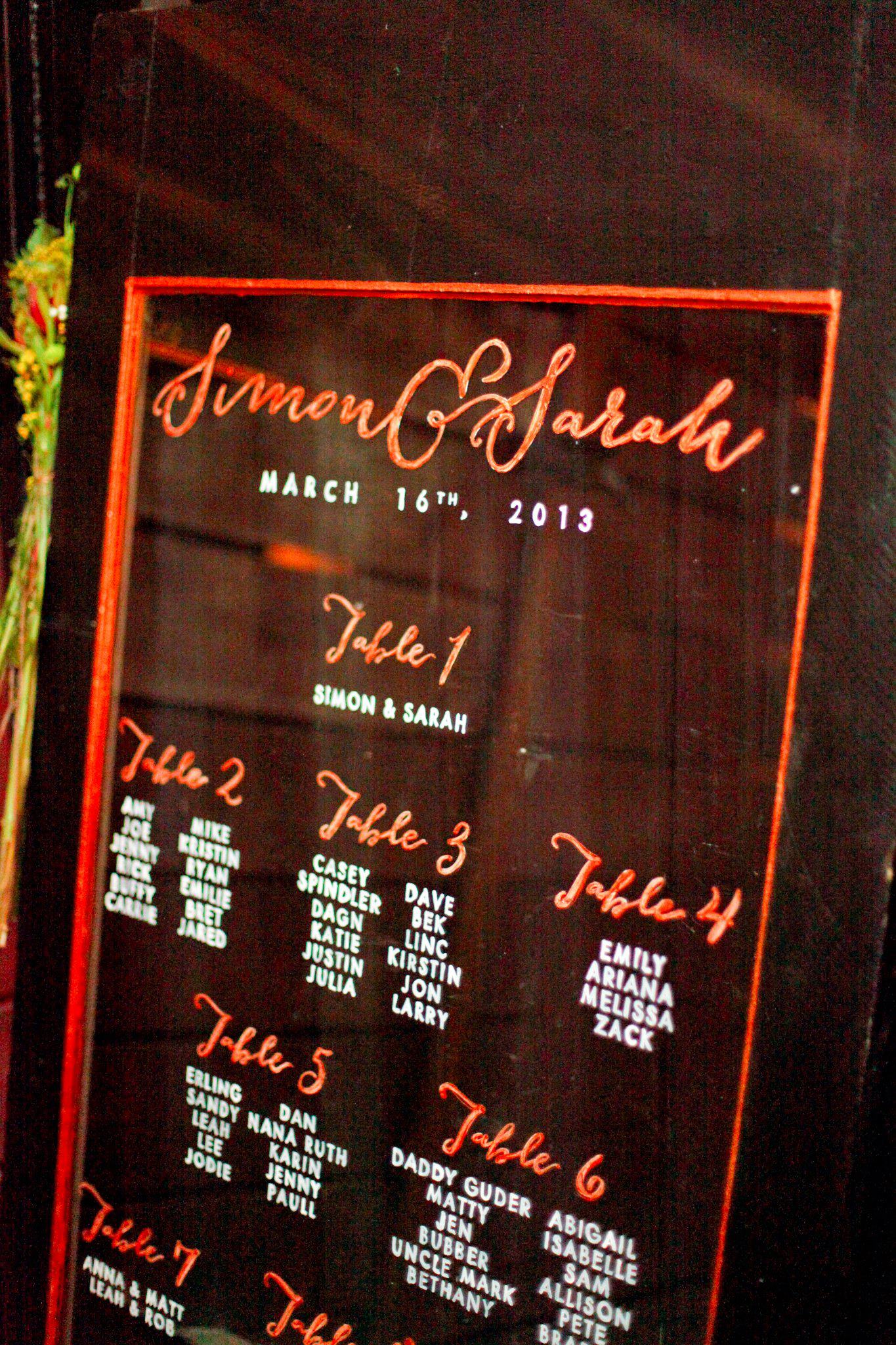
-Reused an old window pane for seating assignments ($20 supply store)

-Bridesmaids could pick their own dress and one of them reused (1 free!)!

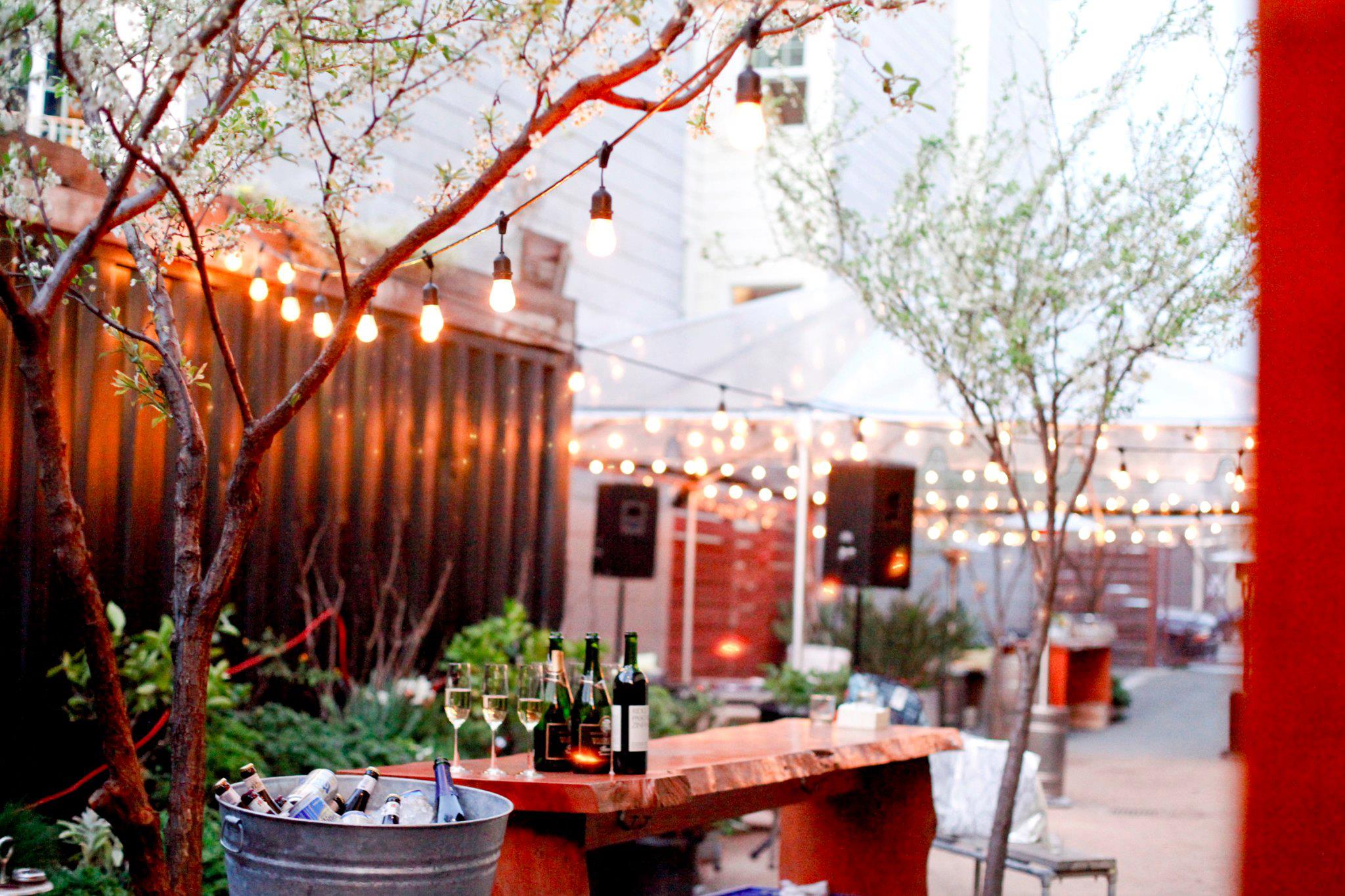
-We didn’t do any decorations – the cafe already had twinkle lights, trees, plants and that was good enough for us! (Free)

-All local and organic food. (Our plates were only $120/person for passed appetizers, bus snacks, chicken/steak/vegetarian options -and EVERYTHING was organic and local!)

-All local wine. With Napa, Sonoma, and Russian River so close, how could we not! Also all local beer except my Dad requested a 30 pack of Coors Light (seriously).

-Our favorite local pies & local legend blue bottle coffee

-We all walked to our after-party at Mission Bowling Club

-Thank you post-cards (save a whole envelope, recycled, soy ink!) from our favorite SF designer, Notify.

-Our rings had no gems or diamonds (conflict free) and were made by a local designer out of gold (mine) and stainless steel (Simon’s)

Eco-fails:

-I bought a new dress. I looked at a lot of reused options (actually tried to get the dress I loved/wore reused but couldn’t find it) and looked at upcycled options but in the end fell in love with my Claire Pettinbone. I also bought new earrings from an NYC boutique and new shoes from Anthropologie. I reused my grandmother’s purse.

-We took the entire wedding party on a cocktail-hour bus tour of San Francisco for 2 hours. Definitely better than doing cabs or something but we could have just stayed put and not put those bus GHGs into the atmosphere. Again, it was totally worth it. It was one of my favorite parts of the wedding and the first time to SF & to the Pacific for many of our family members!

-We had Shannon pick up and make sunflower bouquets from the SF flower market. They were very simple and incredibly gorgeous (and we composted them), and I don’t regret it, I just loved them.

-Groomsman all bought a new shirt and Simon bought a new vest and tie.

-We had a ‘sign in chair’ but also printed a postcard of ourselves and each person that came to the wedding and had them write notes on them. That, one menu for each of the 6 tables, and pieces of paper that Shannon wrote table numbers on were the only paper we used.

Enjoy the pics below and feel free to ask any questions about any of the above choices!

480249_820693915827_702684681_n 902627_825789060117_1877262034_owedding invite903584_825790641947_1804251427_o904283_825789184867_800320593_o903555_825786999247_235204667_o 906251_825788346547_971975560_o892106_825787997247_987156818_o891873_825789164907_1812864581_o

894492_825788286667_1836511157_o

891565_825788336567_307782449_o

902387_825792128967_1768530111_o

A Leg-Powered Vacation

I’m going to skip the ‘sorry I took a few months off to travel, get engaged, get a new job, get a new apartment, etc post’ and just jump right back in. Here’s hoping you will too!

My (now) fiancee and I have been dating for 3.5 years and until just a few weeks ago, we had never been on vacation. This was primarily due to him starting a company and me going to grad school (thus one of us was always super poor), but also because we did long distance for almost 3 of those years. Since we were always hoping a bus (and then later a plane) to visit each other, going elsewhere wasn’t in the cards. Due to the lack of fun trips together, we knew we had to really kick vacation’s ass, and we wanted it to have an eco-component.

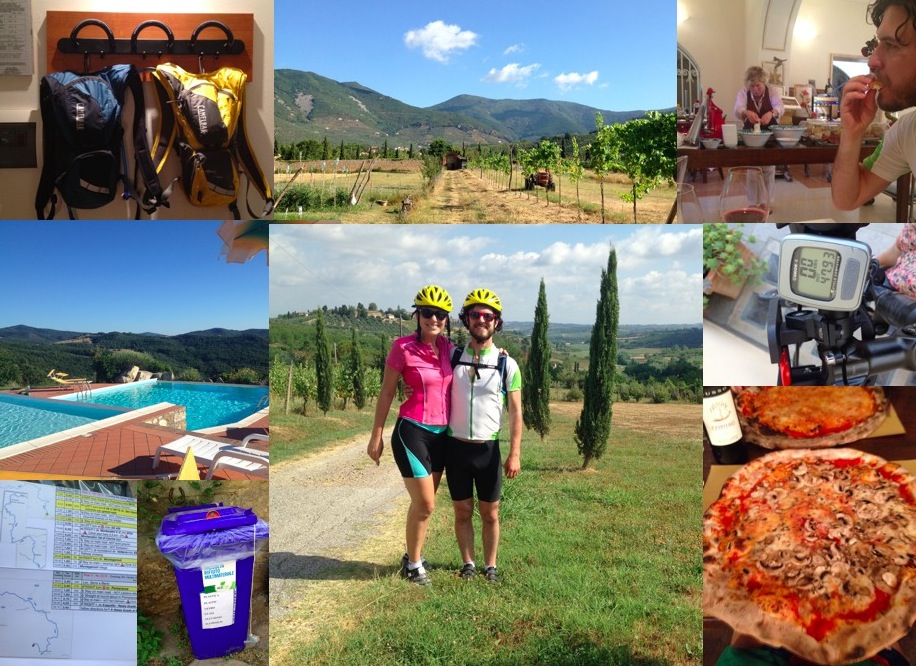
Well, our vacation kicked our ass (literally and otherwise), but it was truly awesome. We decided to bicycle our way through Tuscany Italy for an 8 day leg-powered adventure! We used a company a friend had recommended, EcoRent, who rented us the bicycles, helped plan our route, and even set up hotels, villas, and farmhouses in each destination spot. We started in Calci and made our way to Casciana Terme, Volterra (no vampires encountered), Pomarance, Castagneto Carducci, Pomaia, and Pisa – and lots of towns in between!

We biked about 40 miles per day through medieval villages, vineyards, farmland, 10 person towns, and fell in love with the wine, the pizza, the people, the riding, and even more with each other. Experiencing a country on bike is really beyond words. You don’t have a car window to block out the sounds, the smells, the HEAT, but you can still cover so much ground in a day. You truly get to SEE and FEEL the place you are visiting. We got to stop and do both an olive oil tasting and wine tasting at local farms! Due to the 90 degree days we had to wake up and get on the road by 6am, and were usually finished with the ride by noon. While much of the trip was simply magical, I did have two breakdowns – one of which resulted in a lot of tears and throwing my bike into the woods, and the other resulted in me calling Ecorent to come bring me up the last 9km hill 🙂 I think that’s fair though given the conditions.

I would definitely do it again (although not in the heat of summer!) because it left me feeling so proud of my body. Our legs, lungs, hearts, and attitudes got us so far each day. It was also an incredible team-building activity as we learned the right ways to encourage and push each other; this definitely took a few days to figure out. Each morning it was me, my fiancee, two bikes, and a map and we had to get ourselves from A to B. It really felt like survival training as we had to focus on making sure we had enough food, water, and shelter when it became too hot.

While it wasn’t completely energy-free (a diesel van moved our luggage from point to point along with other bikers’ things doing similar trips), we ate extremely local, reused what we could, used the sun to dry out our laundry, and tried to keep our waste to a minimum. One of the best parts of Tuscany is that everything you find to eat is local. I did end up eating meat (and now I remember how good salami is!), cheese, and bread – three things I don’t normally eat, as there wasn’t much of an option in the small towns (tofu does not exist there ha). But, it was delicious, and fresh, from the butcher down the street, and I felt good to be supporting the local economy. Since returning to SF I have also returned to vegetarianism but it was quite fun to eat like a local, I’ll admit.

Biking through Toscana!

More summer stories coming soon 🙂

San Francisco is the coolest.

In addition to municipal composting, vegan options on many a menu, and bike lanes gallore, SF is home to incredible for-good start-ups like Bicycle Coffee Co. They not only serve delicious organic, hand picked (more sustainable than machine ruined), fair-trade coffee from farmers they have met and visited, BCC also only delivers this coffee to grocery stores and retailers by bike! And, because of their super low-overhead / efficient business model, the prices of their coffee bags are the same as the non-organics sitting next to them. Woah, serious changemaker on our hands here.

This is pretty much my dream, and I continue to allow SF to inspire me to find my for-good venture.

If you live in the bay area, consider switching out your regular cup of joe and instantly make a difference. What a wonderful world we live in, where drinking a cup of coffee can truly make change; in the lives of the Central American farmers, in the air as no-CO2 is added, and as a vote towards making all coffee organic, fair-trade, and sustainable.

Loca-Organic-Vega, What? Eating made Simple.

Sustainable food. Is it better to buy a local organic apple? Well there are no chemicals used (+1 health) and it takes less fuel to get that apple to you (+1 emissions saving). What about the apple from Fiji though? It had to travel thousands of miles to get here (-1 emissions), and who knows what the organic standards are like over there (we’ll give it a 0 for health), but are you also helping to create jobs and livlihoods for developing economies? With the global food trade, some countries are getting themselves on the map. In parts of Africa only fruit grows. Should they just eat fruit all year because it’s local or should they bring money into their economy and give people a living wage by exporting them?  Continue reading